
Blog / Articles

4 Ways To Manage The Ice On Sidewalks In Your Commercial Area
0 comments
How To Prevent Ice On Sidewalks

For many businesses, winter is a difficult time. Because of the slippery ice all around, people try to stay inside most of the time. Therefore, the sales are impacted. Not only this, the piles of snow can prevent people from entering a particular area. The heavyweight of snow can also potentially damage outdoor features like awnings, signages, etc. However, the biggest hazard in winter is slipping. It can lead to serious injuries to workers, customers, and passersby. Potential lawsuits that may follow slip and fall accidents are another point of concern for business owners.

In this article, we will explain how to prevent ice on sidewalks, driveway, and parking lot of your commercial area.

How Do You Manage Ice on Commercial Sidewalks?

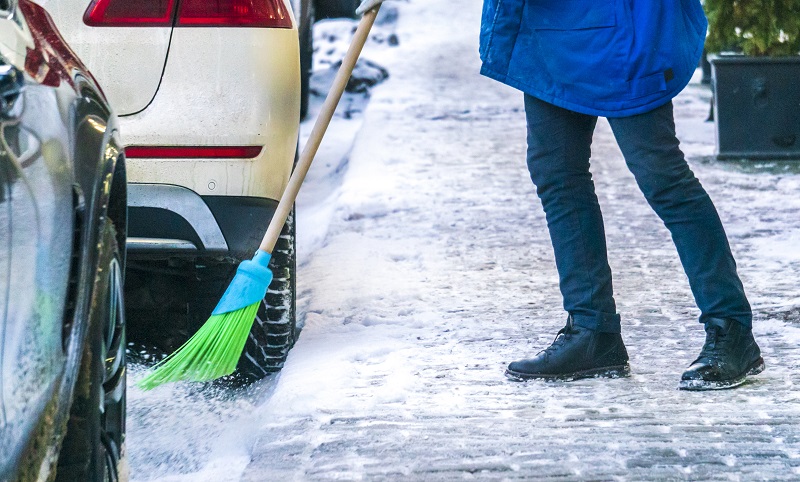
Commercial sidewalk ice management works best by combining several methods: remove snow before it becomes compacted, add traction where slippery ice remains, maintain good visibility around walking areas, and use deicing or anti-icing materials selectively based on surface and weather conditions. Pay particular attention to entrances, stairs, ramps, parking-lot walkways, and other high-traffic areas. Continue monitoring treated areas because melting snow or ice can refreeze when pavement temperatures fall.

Key Takeaways for Commercial Sidewalk Ice Management

  • Remove accumulated snow as early as practical so it is less likely to become compacted into a slippery layer.
  • Use traction materials when immediate grip is needed; traction improves friction but does not necessarily melt ice.
  • Deicing and traction perform different functions and may be used together depending on conditions.
  • Watch for refreezing when temperatures fall after snow or ice begins to melt.
  • Give extra attention to entrances, ramps, stairs, crossings, and other high-traffic walking areas.
  • Choose ice-management materials according to the surface, pavement temperature, weather conditions, and intended function.

Understanding Snow Removal, Traction, Deicing, and Anti-Icing

Commercial winter maintenance involves several different processes. Snow removal physically removes accumulated snow. Traction adds friction to a slippery surface but does not necessarily remove the ice. Deicing is performed after ice has formed and uses a material intended to weaken or melt the ice layer. Anti-icing is a preventive approach used before or near the beginning of an icing event to reduce the formation or bonding of ice. The appropriate method depends on weather conditions, pavement temperature, surface type, traffic, and whether the immediate objective is removal, melting, or improved grip.

Ice management does not end when melting begins. Meltwater can move into shaded areas, low spots, entrances, or drainage paths and refreeze as temperatures drop. Commercial properties should therefore continue checking treated areas as conditions change.

4 Ways to Manage the Ice on Sidewalks in Your Commercial Area

1- Clear up parking lots

Having an open parking lot is additional work for business owners. You need to remove snow and ice regularly to have a safe and accessible parking area. The layers of snow make it difficult to see the parking lane and park the vehicle. You can use an ice melt to remove the snow from your parking lot, walkways, sideways, and even stairs.

2- Add traction

Ice melt takes hours to melt the snow. You want your walkways accessible all the time. By adding traction, you can immediately access the road or sidewalk.

Sand, kitty litter, and grit are some popular traction agents to add friction and prevent slipping. Using these traction agents helps, but you may still have to clean the driveway post melting of the ice as it may stick to the bottom of the shoes and create a mess. 

Another less popular but extremely effective method to help businesses tackle their snow and ice problem is using anti-slip walkway products. This agent has 100% natural crystals in its blend. These crystals act as anti-slip agents, give a good grip on any icy surface and provide good traction.

Get ready for winter with Traction Magic instant grip on snow and ice

3- Have proper lighting

Apart from using anti-slip walkway products, another way to deal with snow and ice is to have proper lighting. Winter means less sunlight and more darkness. To help keep visitors safe, ensure that adequate exterior lights are installed. Areas around your commercial property like the parking lot and driveway should be well lit so that people can see and identify slippery areas. 

4- Do not salt

Using salt to melt ice, pits the cement on your establishment’s walkways, steps, and other concrete areas. Once the cement pits, it will eventually crack or cause potholes on your surface. 

If you’re concerned about your concrete, then do not salt. Salt is slightly acidic, and the acidity breaks down the chemical bonds essential for the concrete’s strength. Another thing that makes the situation worse is that most concrete in driveways is reinforced with steel. And salt corrodes steel.

Pros and Limitations of Common Sidewalk Ice-Control Methods

MethodAdvantagesLimitations
Mechanical snow removalPhysically removes snow; useful before snow becomes compactedRequires equipment or labor and may leave thin ice behind
Traction materialsCan improve grip immediately on slippery surfacesGenerally do not melt the underlying ice and may require cleanup
Deicing materialsCan weaken or melt bonded icePerformance varies with material, temperature and conditions
Anti-icing treatmentHelps reduce ice bonding when applied at the appropriate timeMust be applied before or near the beginning of icing conditions
Improved lightingHelps people identify icy or uneven areasDoes not remove or treat ice
Chloride-free ice-management optionsAvoid chloride-based ingredients where that is a site priorityPerformance and use conditions depend on formulation

Traction vs. Deicing vs. Anti-Icing

AttributeTractionDeicingAnti-Icing
Main purposeIncrease frictionRemove or weaken existing iceReduce formation or bonding of ice
When usedWhen a surface is already slipperyAfter ice formsBefore or near the start of icing
Does it necessarily melt ice?NoYes, when conditions allowIntended primarily to prevent or reduce bonding
Immediate gripOftenDepends on treatment and conditionsNot its primary purpose
Temperature sensitivityUsually less dependent on melting performanceOften importantImportant
Typical roleShort-term friction improvementIce removalPreventive treatment

Conclusion

Snow and ice can have a huge impact on the ground of your commercial establishment. However, with the solutions mentioned above, you can definitely have a safe and slip-free winter.

Get ready for winter with Traction Magic instant grip on snow and ice

Important Limitations to Keep in Mind

  • Traction materials improve friction but generally do not eliminate the underlying ice.
  • Deicer performance can change considerably with pavement temperature, precipitation, dilution, and product formulation.
  • Hot water may temporarily melt ice but can create additional freezing conditions if the water remains on the surface and temperatures fall.
  • Meltwater may refreeze in shaded areas, low spots, and drainage paths.
  • Excess traction material may require cleanup after conditions improve.
  • Use any ice-management material according to its documented application instructions and suitability for the surface being treated.
  • Avoid assuming that one treatment method is appropriate for every sidewalk, parking area, staircase, or weather condition

FAQs

Remove snow before it becomes heavily compacted, keep drainage paths clear, consider anti-icing when conditions are appropriate, and monitor areas where meltwater can refreeze. Add traction where slippery conditions remain.

After removing loose snow, applying an appropriate traction material can improve friction without waiting for the ice itself to melt. Traction and deicing are different processes, so the preferred approach depends on whether immediate grip or ice removal is the main objective.

No. Sand primarily increases surface friction. It may improve footing on ice, but it does not function as a conventional deicer.

Hot water can melt ice temporarily, but it can also leave water behind that may refreeze when surface temperatures are below freezing. This makes it unsuitable as a routine solution for many commercial walking areas.

Repeated exposure to chemical deicers can contribute to concrete deterioration under some freeze-thaw conditions. Chlorides can also contribute to corrosion when they penetrate reinforced concrete. The degree of risk depends on the concrete, moisture conditions, material used, concentration and frequency of exposure.

Options include traction materials that improve friction without melting ice and chloride-free ice-management formulations. Selection should be based on the required function, surface type, temperature conditions and documented product specifications.

Traction materials increase friction on slippery surfaces. Deicers are intended to weaken or melt ice. Because they perform different functions, a winter-maintenance plan may use one or both depending on conditions.

Ice can return when snow melts, water drains onto the walkway, or treated ice turns to water and then refreezes as the pavement temperature falls. Shaded areas and low points can be particularly prone to recurring ice.

Related Winter Surface Guides

Ice Melt vs. Traction Agents for Concrete

What to Use on New Concrete to Add Traction

Eco-Friendly De-Icers

Best Winter Traction Products for Ice and Snow

How to Use Ice Traction

Other Ice Melt Products

Safe Paw

The Original and the #1 Pet and Child Safe Ice Melt for over 20 years. Guaranteed environmentally safe – will not harm waterways and sensitive wetlands. Safe Paw can change how winter affects our planet.
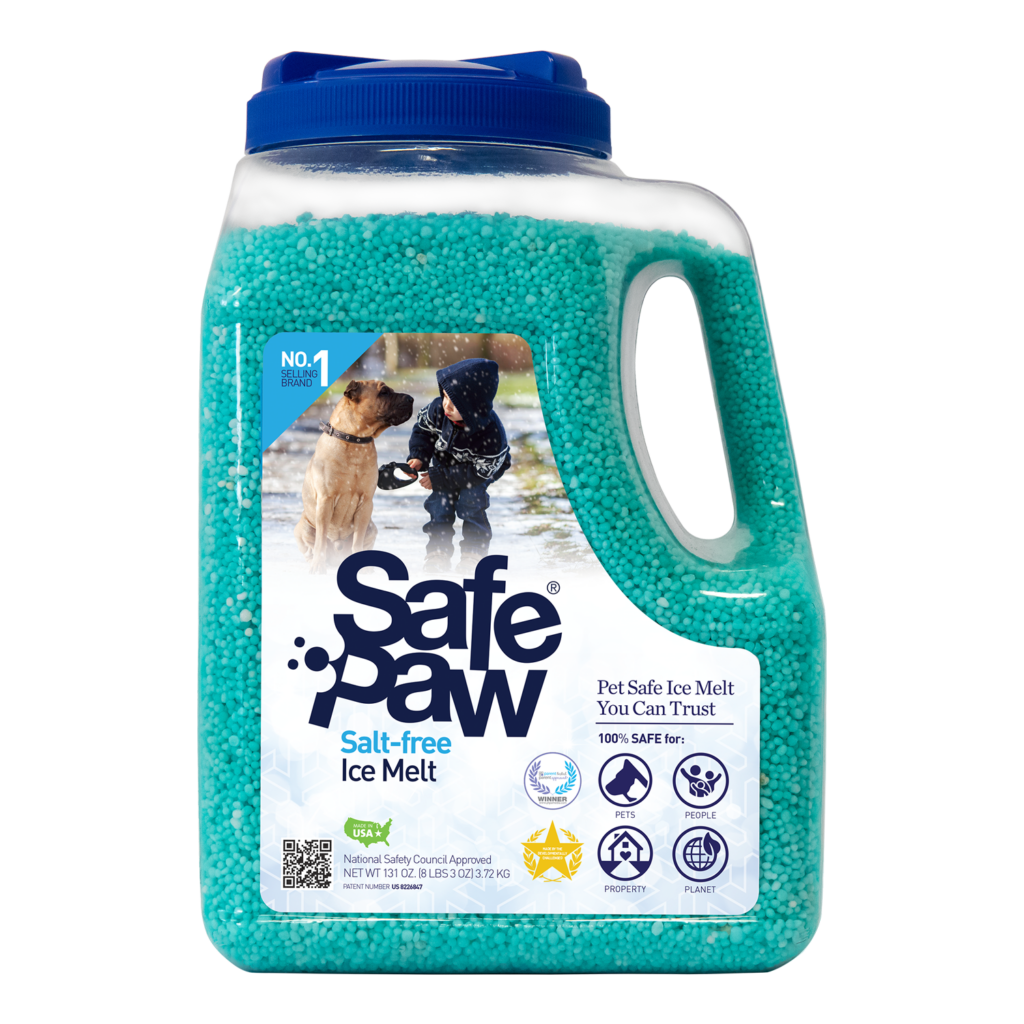
Safe Paw - Pet Safe Ice Melt

Safe Thaw

Imagine an ice melt you can put down and never worry about. It won’t harm pets, kids and your property. That’s Safe Thaw. Unlike anything else on the market, Ice and Snow Management You Can Trust.
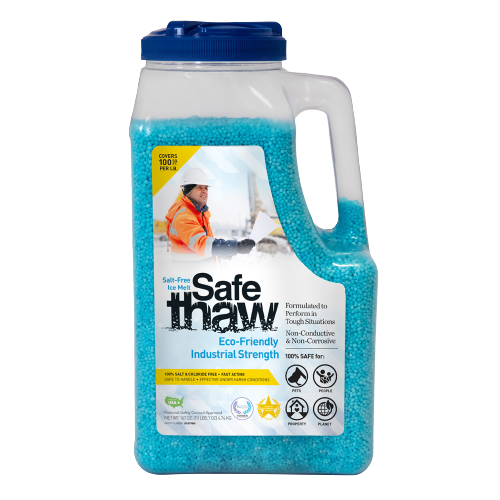
Safe Thaw - Industrial Ice Melt