
Eco-Friendly Deicers: Options, Trade-Offs and Responsible Use
An environmentally preferable deicer is one selected and applied to reduce impacts on water, soil, vegetation, animals, concrete, and metal while still addressing the ice hazard. No deicer is impact-free. A responsible approach begins with shoveling, uses traction materials where melting is unnecessary, selects a surface-appropriate deicer only where needed, follows the stated application rate, and removes loosened snow and ice promptly.
Chloride-free does not automatically mean environmentally harmless. Ingredients, dosage, temperature, runoff, oxygen demand, surface compatibility, and cleanup all need to be considered.
During winter, streets and pathways are filled with snow and ice. People use different ice melt agents and chemicals to clear it and to make the environment safe and conformable. However, not all de icers are safe, majority of them are harmful to people, pets and scorch the earth at the same time.
Key Takeaways
- No deicer should be described as completely harmless to the environment.
- Shoveling and physical removal can reduce the amount of deicer required.
- A traction material improves grip but does not necessarily melt ice.
- Chloride-free products avoid adding chloride but may still have other environmental effects.
- Apply only the amount specified for the surface and conditions.
- Remove slush and loosened ice before it refreezes or enters drainage systems.
- Evaluate ingredients, temperature range, surface compatibility, runoff, cleanup, and storage—not merely the “eco-friendly” label.
What Makes a Deicer Environmentally Preferable?
1. Ingredients
Determine whether the product contains chloride salts, acetates, formates, urea-based ingredients, abrasives, or another freezing-point depressant.
2. Application quantity
Environmental impact depends partly on how much material is applied. Overapplication increases residue and runoff without necessarily improving results.
3. Effective temperature
A material used outside its effective temperature range may require excessive application or provide limited benefit.
4. Runoff and water quality
Consider whether dissolved ingredients can move into storm drains, groundwater, streams, ponds, or landscaped areas.
5. Effects on infrastructure
Assess potential effects on concrete, metal, flooring, vehicles, drainage systems, and porous pavement.
6. Effects on soil and vegetation
Repeated accumulation may alter soil conditions or affect nearby plants.
7. Cleanup and recovery
Some traction materials can be swept up, while dissolved deicers may travel with meltwater.
8. Packaging and storage
Concentrated materials should be stored dry and protected from spills or uncontrolled runoff.
Pros and Limitations of Lower-Impact Winter Methods
| Method | Potential advantages | Limitations |
| Shoveling or plowing | No deicer residue; removes the snow source | Requires time and physical effort; may not remove bonded ice |
| Broom or snow brush | Useful for light, dry snow | Limited effectiveness on compacted snow or ice |
| Abrasive traction material | Adds immediate friction without melting ice | Can be displaced, tracked indoors, or washed into drains |
| Chloride-free deicer | Does not add chloride to runoff | Other ingredients can still affect water, soil, surfaces, or oxygen levels |
| Heated mat | Reduces or avoids chemical application in a defined area | Uses energy; limited coverage; requires installation and maintenance |
| Surface-compatible deicer | Can loosen bonded ice | Environmental and surface effects depend on ingredients and application |
| Drainage correction | Reduces repeated ice formation at its source | May require property modifications |
| Anti-icing treatment | May prevent a strong ice-pavement bond | Timing and dosage are important; it still introduces material to the environment |
Comparing Winter Ice-Management Options
| Option | Primary function | Adds chloride? | Melts ice? | Main environmental consideration |
| Shoveling/plowing | Physical removal | No | No | Energy and equipment use |
| Sand or mineral grit | Traction | No | No | Sediment, tracking, and cleanup |
| Ice Traction | Traction | No, if verified by composition | No | Application quantity and cleanup |
| Walk On Ice | Traction | Verify formulation | Verify intended function | Follow current product documentation |
| Sodium chloride | Deicing | Yes | Yes, within operating conditions | Chloride runoff and corrosion |
| Calcium chloride | Deicing | Yes | Yes, within operating conditions | Chloride runoff, heat, and surface compatibility |
| Magnesium chloride | Deicing | Yes | Yes, within operating conditions | Chloride runoff and material compatibility |
| Acetate/formate deicer | Deicing | No chloride | Yes, depending on formulation | Oxygen demand, concentration, and runoff |
| Chloride-free ice melt | Deicing | No chloride | Depends on formulation | Other ingredients still require evaluation |
| Heated mat | Melting/prevention | No | Yes, locally | Energy use and limited coverage |
Understanding Deicers
Deicers are substances used to remove or prevent ice formation. They work by lowering the freezing point of water, causing ice to melt, or preventing it from forming. However, many deicing agents, such as salt-based ice melts, can be harmful to the environment, pets, and can damage concrete surfaces.
What is an Eco-friendly Deicer?
This is an ice melt that does not contain chemicals that are hazardous to the environment, animals and people. For this reason, this article covers several safe ice melt options, they are conveniently used to get rid of ice and snow:
Traction Magic: Instant Traction on Icy Surfaces
Alongside Safe Thaw, another game-changer in the deicing industry is Traction Magic. This product is a traction agent that provides instant traction on icy surfaces, perfect for use on sidewalks, steps, or even for car traction. It’s 100% natural and safe for pets, people, and property.
Traction Magic is made from a blend of natural volcanic rock and seven other minerals. It works by absorbing the liquid layer on top of the ice, allowing the grippers to lock into the ice creating a stable non-skid surface. As the ice melts, Traction Magic maintains its grip on the surface, providing traction until the ice is gone. For disposal, simply sweep Traction Magic into your garden or toss it into the trash.
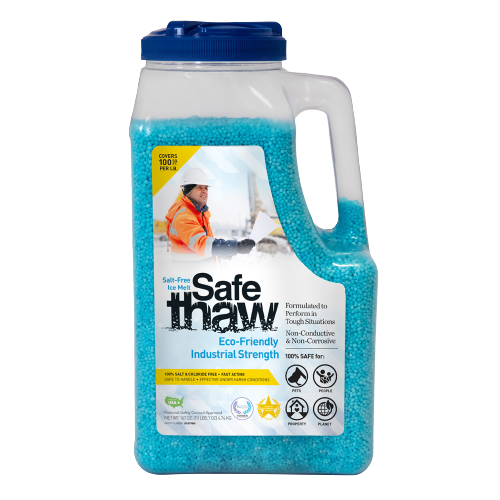
Safe Thaw: A Green Deicer
Safe Thaw is a chemical-free, toxin-free ice melt that’s safe for both pets and property. Unlike traditional deicing agents, Safe Thaw doesn’t contain salt or harmful chemicals, making it an environmentally friendly ice melt.
Get ready for winter with Traction Magic instant grip on snow and ice
Ways to Reduce the Environmental Impact of Winter Ice Management
- Before precipitation
- Monitor the forecast and surface temperature.
- Repair drainage problems that cause repeated refreezing.
- Clear leaves and debris from walkways and drains.
- Place secured entrance mats where appropriate.
- Prepare the correct application equipment.
During and immediately after snowfall
- Shovel early before snow is compacted.
- Remove as much snow as practical before applying another material.
- Treat only the remaining icy areas.
- Use traction material where grip is needed but melting is unnecessary.
- Use a suitable deicer only where bonded ice must be loosened.
Get ready for winter with Traction Magic instant grip on snow and ice
After conditions improve
- Remove slush before it refreezes.
- Sweep up unused abrasive material.
- Keep accumulated material away from storm drains.
- Clean tracked residue from indoor entrances.
- Record where repeated icing occurred so drainage can be improved.

Warnings and Limitations
- “Natural,” “green,” “pet friendly,” and “eco-friendly” are not complete descriptions of environmental performance.
- Chloride-free does not mean impact-free.
- Traction agents improve grip but do not necessarily melt or remove ice.
- A product effective at one temperature may be less useful at a lower temperature.
- Overapplication can increase runoff, residue, cleanup, and surface exposure.
- Abrasive materials can collect in drains or be tracked indoors.
- Some organic deicers may increase biological oxygen demand when they enter water.
- Repeated deicer exposure can affect concrete and metal differently depending on material, concentration, saturation, and freeze-thaw conditions.
- Do not mix household ingredients unless their compatibility and intended application are known.
- Always follow the product’s surface, temperature, dosage, storage, and cleanup instructions.
FAQs
Conclusion
In conclusion, though the eco friendly de-icer options listed above come in handy. It is a sure fact that they are not for everyone. That is why we have safe de icers in the market. You do not have to look any further, Traction Magic delivers. It melts ice effectively and it is safe for the environment and pets.
Traction Magic and Safe Thaw offers green, effective solutions for ice removal and improved traction during the winter months. Both products are designed with safety in mind, ensuring they’re gentle on the environment, pets, and property while providing superior performance. With these products, you can face winter conditions with confidence. Choose the green way to deice, and let’s keep our environment, pets, and property safe.
Related Articles
- Deicer versus traction agent: what is the difference?
- How road salt affects freshwater
- What to use on new concrete for traction
- How to reduce deicer application
- Sand for ice: uses and limitations
- How drainage causes recurring walkway ice
- Chloride-free ice melt explained
- How to choose a winter treatment for concrete
- Temporary and permanent traction methods

Other Ice Melt Products
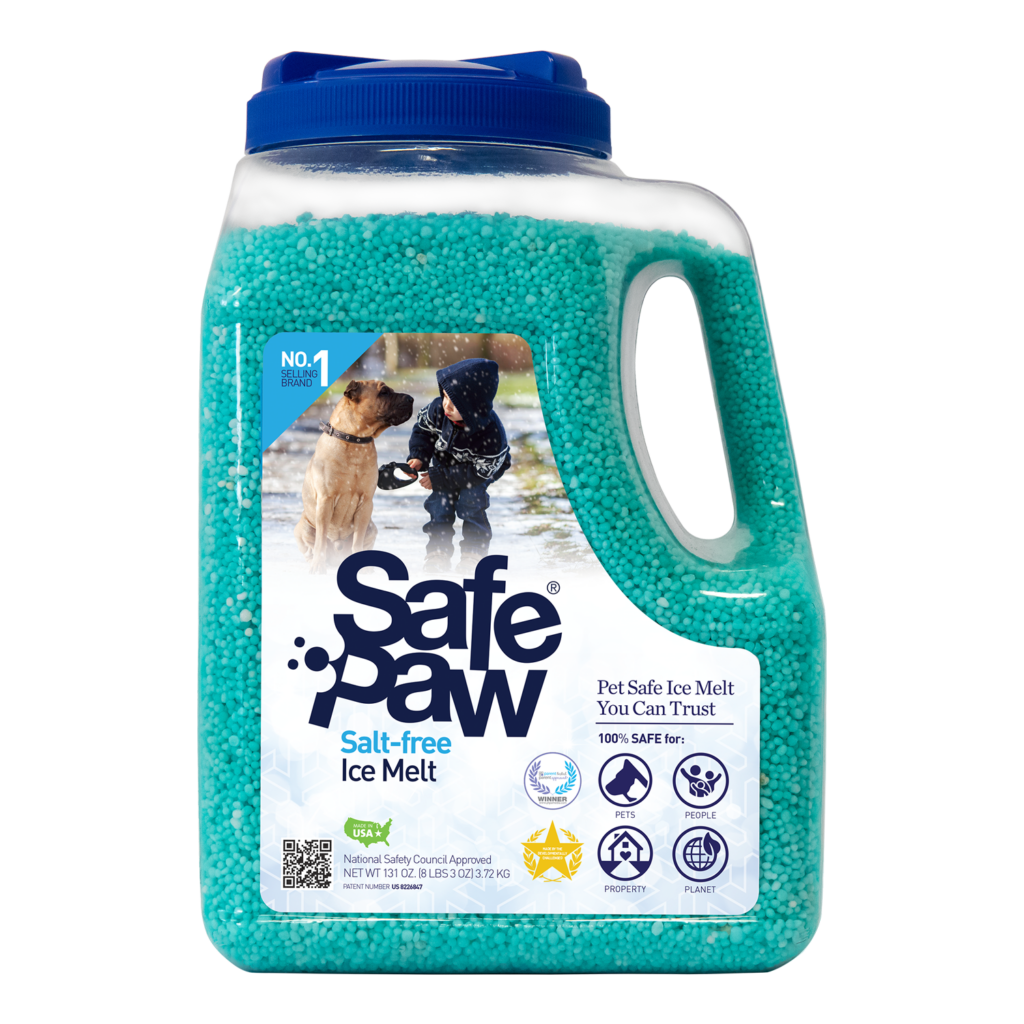
Safe Paw
The Original and the #1 Pet and Child Safe Ice Melt for over 20 years. Guaranteed environmentally safe – will not harm waterways and sensitive wetlands. Safe Paw can change how winter affects our planet.
Safe Thaw
Imagine an ice melt you can put down and never worry about. It won’t harm pets, kids and your property. That’s Safe Thaw. Unlike anything else on the market, Ice and Snow Management You Can Trust.