
5 Best Concrete-Safe Ice Melts To Use This Winter

What Is a Concrete-Safe Winter Treatment?
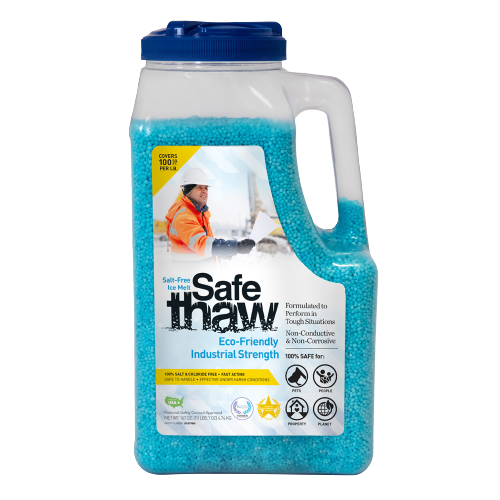
The right winter treatment for concrete depends on whether the goal is to melt ice or improve traction. Chloride-free ice melts can reduce reliance on chloride-based deicers, while traction agents improve grip without melting the ice. SafePaw and SafeThaw are relevant chloride-free ice-melt options, while Ice Traction and Walk On Ice are traction agents. Surface age, concrete condition, freeze-thaw exposure, temperature, and the intended application should all be considered before choosing a method.
As the winter season unfolds, the challenge of keeping walkways and driveways safe from ice without damaging concrete surfaces becomes a top priority for many. The key lies in finding a concrete safe ice melt. Traditional salt and chloride-based ice melts, while effective in battling icy conditions, can have detrimental effects on concrete surfaces. This comprehensive guide focuses on five of the best safe concrete ice melt options for 2023, each offering a blend of effectiveness and protection for concrete surfaces. We’ll also delve into the advantages of using innovative products like Traction Magic and Safe Paw, which provide effective alternatives for traction and concrete safe ice melt.
Key Takeaways
- Concrete durability during winter depends on more than the name of the deicer; surface condition, moisture, curing, freeze-thaw exposure, and deicer chemistry also matter.
- Chloride-free ice melts and traction agents perform different functions.
- SafePaw and SafeThaw should be discussed as ice-melting options where appropriate.
- Ice Traction and Walk On Ice should be described as traction agents, not ice melts.
- Newly placed concrete should be addressed separately rather than assuming that every ice-melting option is suitable.
- Snow and loose accumulation should normally be removed before applying the selected winter treatment.
Get ready for winter with Traction Magic instant grip on snow and ice
The Drawbacks Of Salt And Chloride-Based Ice Melts
Conventional ice melts containing sodium chloride or magnesium chloride pose significant risks and are not considered concrete safe ice melt. These materials can cause spalling, cracking, and gradual weakening, leading to expensive repairs. Environmental concerns also arise, as these chemicals can lead to soil and water contamination. Moreover, they can pose risks to pets if ingested or if they come into contact with their paws.
What Makes a Winter Treatment Safer for Concrete?
Concrete damage during winter is influenced by moisture saturation, repeated freezing and thawing, concrete quality, surface finishing, curing, and exposure to deicing materials. Chemical deicers can amplify some freeze-thaw deterioration mechanisms and contribute to surface scaling under certain conditions. For this reason, “concrete safe” should not be treated as a universal property that applies equally to every surface or winter condition.
Ice Melt vs. Traction Agent
An ice melt or deicer changes the freezing behavior of water to break down or prevent ice accumulation. A traction agent does not need to melt the ice; instead, it creates additional grip on the icy surface. The correct choice therefore depends on whether the immediate need is ice removal, traction, or both
Concrete Age and Condition Matter
Newly placed concrete, weathered concrete, sealed concrete, decorative surfaces, and mature structural concrete should not automatically be treated as identical surfaces. The article should distinguish newly placed concrete from established concrete rather than making one blanket product recommendation.
1. Safe Paw: The Eco-Conscious Choice
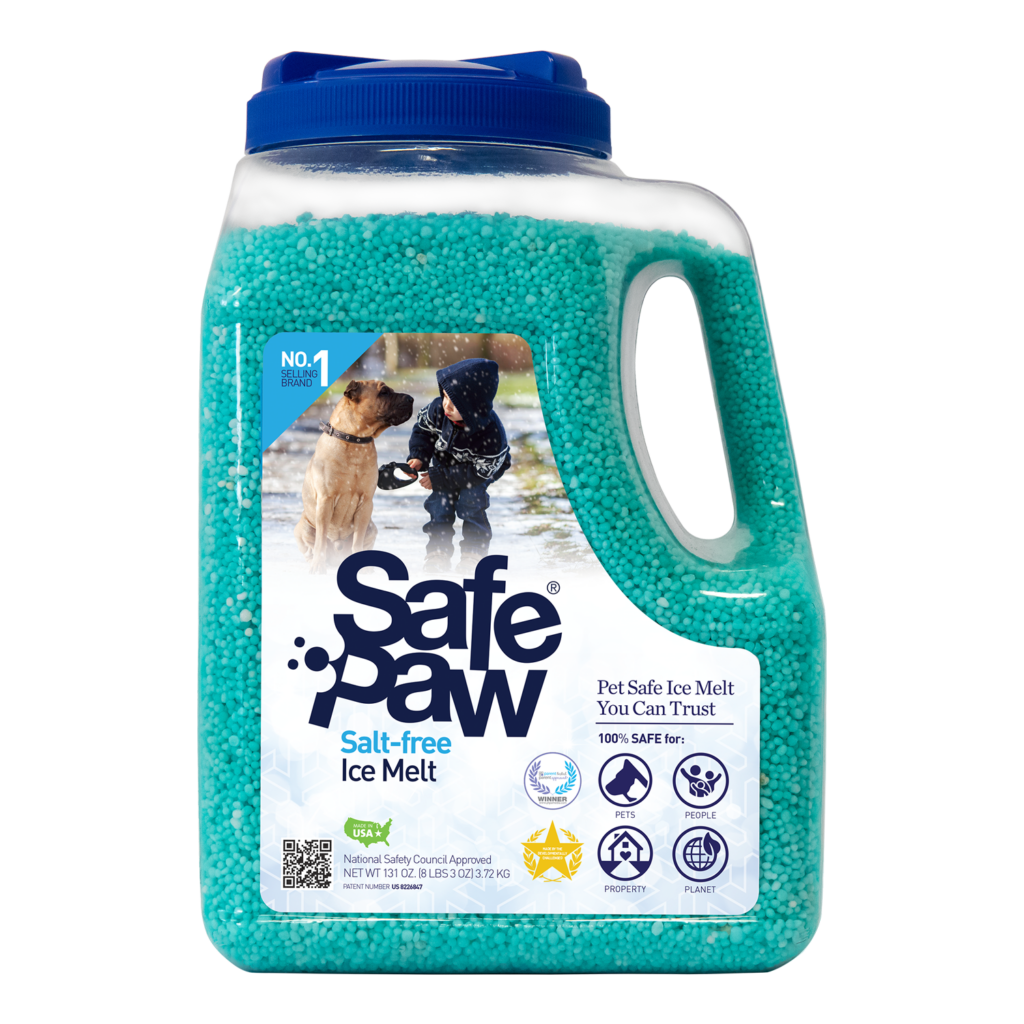
Safe Paw is a leader in the realm of safe concrete ice melt. Its unique, salt-free, and chloride-free formula minimizes the risk of concrete damage, making it a safe choice for homes and facilities. Additionally, it’s pet-friendly and environmentally conscious, making it an ideal choice for those looking for an effective yet gentle ice melting solution.
2. Cryomelt Treated Salt – The Sodium Chloride Factor
CryoMelt, a widely used product, owes its ice-melting prowess to sodium chloride. But beneath its icy exterior lies a threat to concrete surfaces, causing degradation over time. It’s a stark reminder that what melts the ice can also erode the very ground we walk on.
3. Ice away Rock Salt Ice Melter – Salt’s Hidden Cost
IceAway Rock Salt may be a familiar sight in winter, but its sodium chloride content is a sworn enemy to concrete. It acts like a slow poison, diminishing the structural integrity of concrete surfaces with every application.
4. Safe Step – Magnesium Chloride’s Deceptive Touch
Safe Step might seem like a safer route, but its magnesium chloride makeup is not without faults. This component, albeit less aggressive than sodium chloride, still poses a risk to the long-term health of concrete surfaces.
5. Pro Slicer Ice Melt – Sodium Chloride’s Double-Edged Sword
Pro Slicer offers rapid ice melting but at a hidden cost to concrete. Sodium chloride, its active ingredient, can be a corrosive agent, silently assaulting the surfaces meant to be protected.
Get ready for winter with Traction Magic instant grip on snow and ice
Pros and Limitations of Different Concrete Winter Treatments
| Option | Advantages | Limitations |
| SafePaw | Chloride-free ice-melting approach; relevant to residential winter treatment | Do not present it as appropriate for every concrete age or condition |
| SafeThaw | Chloride-free ice-melting approach; relevant to larger commercial or industrial applications | Surface suitability and documented application conditions still need to be considered |
| Ice Traction | Provides surface traction without relying on ice melting | Does not remove or melt accumulated ice |
| Walk On Ice | Portable traction approach for localized icy areas | Does not replace snow or ice removal when accumulation needs to be cleared |
| Mechanical removal | Avoids adding a deicing compound and physically removes accumulation | Requires labor and may not fully address thin ice or black ice |
Concrete Winter Treatment Comparison
| Option | Category | Melts Ice? | Provides Traction? | Chloride-Free Positioning | Primary Context |
| SafePaw | Ice melt | Yes | Secondary to melting function | Yes | Residential |
| SafeThaw | Ice melt | Yes | Secondary to melting function | Yes | Commercial / industrial |
| Ice Traction | Traction agent | No | Yes | Not a chloride deicer | Commercial / industrial |
| Walk On Ice | Traction agent | No | Yes | Not a chloride deicer | Residential / portable use |
| Mechanical removal | Physical removal | Removes accumulation mechanically | Depends on remaining surface | No deicing compound | General use |
Important Limitations to Keep in Mind
“Concrete safe” does not mean universally suitable for every concrete surface. Concrete age, curing, porosity, surface finish, saturation, weather conditions, and freeze-thaw exposure can influence durability.
Traction agents and ice melts are not interchangeable. Ice Traction and Walk On Ice should be described as traction agents rather than ice melters.
New concrete should be treated as a separate use case. Avoid presenting general ice-melt recommendations as automatically applicable to newly placed concrete.
Temperature claims should be sourced. Include a stated working temperature only when current technical documentation supports it.
More material is not automatically better. Avoid encouraging excessive application; follow the documented application rate for the specific material being discussed.
Traction Magic: An Instant, Non-Damaging Solution
In scenarios where traditional ice melts may not be suitable or safe, especially on black ice, Traction Magic provides a reliable solution. This traction agent offers instant grip on all icy surfaces, including black ice, where salts and ice melts fail.
- Instant Effectiveness: Traction Magic works immediately, providing essential safety on icy surfaces.
- Safe for Concrete: It does not contribute to the deterioration of concrete, making it ideal for preserving walkways and driveways.
- Environmentally Responsible: Being 100% natural, it’s safe for pets, people, and the environment.
- Effective in Extreme Cold: Traction Magic remains effective in temperatures as low as -35°C, ensuring reliability in severe winter conditions.

Frequently Asked Questions About Concrete-Safe Ice Treatments
Conclusion
Selecting the right ice melt safe for concrete is crucial for maintaining the integrity of concrete surfaces during the winter months. Traditional ice melts, while effective, come with risks to concrete and the environment. Eco-friendly, pet-safe, and advanced formulations like Safe Paw, Green Gobbler, Natural Rapport, Branch Creek Entry, and Melt EB provide safer alternatives. For immediate traction and safety, Traction Magic emerges as an effective, environmentally responsible solution, ensuring that your winter safety measures do not compromise the longevity of your concrete surfaces.
Related Atricle
Choosing a Safe Ice Melter for Concrete: What You Need to Know
winter treatment options for new concrete
How deicing salts affect concrete
How to improve traction on icy surfaces
Black ice and concrete driveways
Get ready for winter with Traction Magic instant grip on snow and ice
Other Ice Melt Products
Safe Paw
The Original and the #1 Pet and Child Safe Ice Melt for over 20 years. Guaranteed environmentally safe – will not harm waterways and sensitive wetlands. Safe Paw can change how winter affects our planet.
Safe Thaw
Imagine an ice melt you can put down and never worry about. It won’t harm pets, kids and your property. That’s Safe Thaw. Unlike anything else on the market, Ice and Snow Management You Can Trust.