
3 Easy Ways To Get Instant Traction On Icy Surface
If you need immediate traction on ice, focus on increasing grip rather than waiting for the ice to melt. Spread coarse sand, grit, or another traction material over the icy surface; use footwear with good tread or outdoor ice cleats; and walk slowly using short steps. Traction materials improve grip but do not remove the underlying ice, so snow and ice should still be cleared or treated when conditions allow.
Key Takeaways
- Traction and deicing are different: traction improves grip, while deicing is intended to remove or loosen ice.
- Coarse materials can provide immediate grip when spread over an icy walking surface.
- Purpose-designed traction materials can be useful where immediate surface grip is the primary need.
- Footwear with good tread or outdoor traction aids can improve personal grip when walking on unavoidable ice.
- Traction does not eliminate the underlying ice, so the surface can remain slippery.
- Short, slow steps provide better control when walking across icy areas.
Winter months are beautiful, but they can be dangerous too. When the white snow on your driveway turns into a treacherous layer of ice, it becomes difficult to walk on ice. It can lead to serious slip and fall accidents. As a house or business owner, It’s your responsibility to provide safe access to your driveway during the snowy winters for your family and visitors.
Most of the time, we use salt or ice melt to get rid of the snow. But Icemelt does not serve the need for people to cross the icy or snowy surface immediately. One million Americans are injured every year. Nearly 600,000 are hospitalized every year due to falls on ice. In such cases, a traction agent works better than an ice melt or salt.
Using a traction agent doesn’t help in melting the ice, but it increases the traction and prevents the chances of slip and fall accidents.
When Immediate Ice Traction Is Most Useful
Traction can be especially useful on:
- Icy sidewalks
- Residential driveways
- Outdoor steps
- Walkways
- Building entrances
- Parking areas
- Paths between buildings
- Areas affected by refreezing
- Temporary icy patches
- Locations where immediate pedestrian access is needed
A Simple Ice-Traction Process
- Remove loose snow where practical.
- Identify the most slippery or frequently used areas.
- Apply the selected traction material evenly.
- Check whether adequate surface texture has been created.
- Reapply if traffic or weather moves the material.
- Continue treating or removing the underlying ice as appropriate.
3 Easy Ways to Get Instant Traction on Ice
1. Spread Coarse Sand or Grit
Spread a thin, even layer of coarse sand or grit over the icy area. The particles create a rougher contact surface that can improve grip immediately. Sand and grit do not melt the ice, so they should be considered temporary traction rather than an ice-removal method. Reapplication may be needed after snow, foot traffic, or changing weather moves the material.
2. Use a Purpose-Designed Traction Material
A purpose-designed traction material can be applied to icy driveways, sidewalks, steps, and other outdoor walking areas where immediate grip is needed. These materials work primarily by increasing surface texture rather than by waiting for ice to melt. Follow the applicable usage instructions and consider the type of surface being treated.
3. Use Footwear With Strong Tread or Outdoor Ice Grips
When walking across unavoidable ice, footwear can also affect traction. Use insulated, water-resistant footwear with a well-defined rubber tread. Outdoor ice cleats or similar traction aids may provide additional grip on suitable icy surfaces. Walk slowly and take short steps so you can react more easily to changes in traction.
OSHA specifically recommends insulated, water-resistant footwear with good rubber tread, together with slower walking and shorter steps when walking on ice is unavoidable. (OSHA)
Pros and Cons of Common Ways to Improve Traction on Ice
| Method | Advantages | Limitations |
| Coarse sand or grit | Provides immediate surface texture; simple to apply; useful for temporary traction | Does not melt ice; can move under traffic; may require cleanup |
| Purpose-designed traction material | Intended specifically to increase grip; useful on frequently used icy areas | Does not remove the underlying ice; application requirements vary |
| Ice cleats or footwear traction aids | Adds grip directly to footwear; useful when crossing unavoidable icy areas | Helps the wearer rather than treating the surface; some traction aids should be removed before walking on smooth indoor floors |
| Good rubber-tread winter footwear | Useful for everyday winter walking; no surface treatment required | Cannot make severely icy surfaces slip-free |
Important Limitations of Ice Traction Methods
Traction reduces slipperiness but does not make an icy surface completely slip-free. Sand, grit, and other traction materials generally improve surface grip without removing the underlying ice. Material can also be displaced by traffic, wind, snowfall, or thaw-and-refreeze conditions, so treated areas should be checked periodically. Footwear traction aids improve personal grip but do not improve the surface for other pedestrians.
- Do not assume a treated area is completely non-slip.
- Reapply traction material when it becomes displaced.
- Remove loose snow where practical before application.
- Check whether a material is appropriate for the surface being treated.
- Use additional caution on steps, slopes, and black ice.
- Remove outdoor traction aids before entering smooth indoor flooring when appropriate.
Traction Material vs. Ice Melt
| Factor | Traction Material | Ice Melt |
| Primary purpose | Increase surface grip | Melt or loosen ice |
| Immediate grip | Can provide grip immediately after application | Usually requires time to affect the ice |
| Removes ice | No | Designed to help remove or loosen ice |
| How it works | Adds texture/friction to the surface | Changes conditions that allow ice to melt |
| Typical use | Temporary traction on slippery walking areas | Ice management and removal |
| Reapplication | May be required if material is displaced | Depends on conditions and material used |
| Best when | Immediate grip is the priority | Reducing or removing ice is the priority |
Frequently Asked Questions About Traction on Ice
Related Articles
- How Traction Materials Work on Ice
- Traction vs. Ice Melt: What’s the Difference?
- How to Improve Traction on an Icy Driveway
- How to Walk More Safely on Ice
- Winter Traction for Sidewalks and Steps
- What Causes Black Ice?
- How to Handle Thaw-and-Refreeze Conditions
- Choosing Traction for Residential Walkways
Other Ice Melt Products
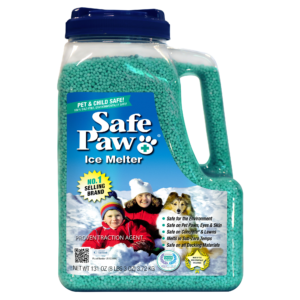
Safe Paw
The Original and the #1 Pet and Child Safe Ice Melt for over 20 years. Guaranteed environmentally safe – will not harm waterways and sensitive wetlands. Safe Paw can change how winter affects our planet.
Safe Thaw
Imagine an ice melt you can put down and never worry about. It won’t harm pets, kids and your property. That’s Safe Thaw. Unlike anything else on the market, Ice and Snow Management You Can Trust.