
Ice Melting Explained: The Key Temperatures You Need To Know

What Temperature Does Ice Melt?
Ice melts at 0°C (32°F) under standard conditions. In outdoor winter conditions, however, surface temperature, dissolved salts, concentration, sunlight, and other factors can affect when ice begins melting and how quickly it melts. Salt lowers the freezing point by creating a brine, while traction materials work differently by improving grip rather than depending entirely on melting.
Important distinction: the lowest temperature at which a salt-water solution can theoretically remain liquid is not necessarily the temperature at which that deicer works efficiently on a driveway or pavement.
That second sentence is particularly valuable because FHWA distinguishes the NaCl eutectic temperature from its practical winter operating range. (Federal Highway Administration)
There I was on a typical winter day, gazing out the window with a hot cup of cocoa in hand, my driveway a glittering sheet of ice. It got me thinking –at what temp does ice melt? Sure, we’ve all heard the standard 0 degrees Celsius (32 degrees Fahrenheit) line, but when you’re staring down a driveway that’s more ice rink than a pathway, you start to wonder if there’s more to the story.
Key Takeaways About Ice Melting Temperatures
- Pure ice melts at approximately 0°C (32°F) under standard atmospheric conditions.
- Salt lowers water’s freezing point by creating a salt-water solution called brine.
- The theoretical lowest freezing temperature of a brine should not be confused with its practical deicing temperature.
- Sodium chloride brine has a eutectic temperature near –21°C (–6°F), but ordinary road salt becomes much slower in colder conditions; FHWA notes that many agencies consider it impractical near or below –9.5°C (15°F).
- Pavement temperature can be more useful than air temperature when evaluating winter surface conditions.
- Some winter materials improve traction instead of melting ice, so their performance should not be described using a melting-temperature threshold alone.
FHWA provides the technical basis for the NaCl distinction. (Federal Highway Administration)
A. What Exactly Does 0°C Mean?
For pure water under ordinary atmospheric conditions, 0°C (32°F) is the temperature around which solid ice and liquid water can coexist. Ice does not necessarily disappear instantly when the temperature reaches 0°C. Melting speed also depends on how much heat is available from the air, pavement, sunlight and surrounding materials.
B. Why Does Salt Lower the Freezing Point?
When salt dissolves in liquid water on the surface of ice, it forms brine. Dissolved ions interfere with the formation of the organized crystal structure needed for water to freeze. This is known as freezing point depression.
ACS explains this freezing-point-depression mechanism directly. (American Chemical Society)
C. Air Temperature vs. Pavement Temperature
Air temperature and pavement temperature are not always the same. A surface exposed to sunlight can be warmer than the surrounding air, while bridges and shaded surfaces can cool differently. For winter surface treatment, the actual surface temperature is therefore an important consideration.
D. Melting vs. Traction
Ice melting and ice traction solve different parts of the winter-surface problem. A deicer attempts to create liquid brine and weaken the bond between ice and the surface. A traction material is intended to increase grip on an icy surface and does not necessarily need to melt the ice first.
Get ready for winter with Traction Magic instant grip on snow and ice
The Not-So-Simple Science Of Melting Ice
So, ice melting. We’ve all been there, right? You think it’s straightforward until you really start to ponder, “At what temp will ice melt?” Turns out, it’s a bit like trying to solve a puzzle with missing pieces. The standard answer is all well and good, but there are these little quirks – like how the type of ice, what’s mixed in with it, and even the day’s air pressure – can nudge that melting point around.
Ice Melting Temperature Quick Reference
| Condition | Approximate Temperature | What It Means |
| Pure ice/water transition | 0°C / 32°F | Standard melting/freezing point |
| Sodium chloride brine eutectic | About –21°C / –6°F | Theoretical lowest freezing point at a specific concentration |
| Practical ordinary salt use | Often becomes inefficient around –9.5°C / 15°F and below | Melting action can become too slow for typical operations |
| Below a deicer’s useful range | Varies | Physical removal or traction may become more relevant |
Salt And Chloride-Based Melts: The Go-To With A Catch
Now, onto the whole salt and chloride ice melt saga. They’ve been the long-standing answer to the questions like “At what temp does ice melt?” conundrum. These products work by lowering water’s freezing point, making ice melt in temperatures that would usually be too chilly. Sounds great, but here’s the rub: while they tackle one problem, they’re often creating another. They can be messy, not to mention they can leave your walkway more like a slip-and-slide than a safe path, especially with that notorious black ice.
Melting Ice vs. Adding Traction
| Approach | Pros | Limitations |
| Sodium chloride deicing | Widely understood; creates brine that lowers the freezing point | Slower as temperatures fall; introduces chloride into the environment |
| Calcium chloride deicing | Forms brine and dissolves exothermically | Still a chloride-based material; performance varies with conditions |
| Mechanical removal | Removes snow or ice rather than relying on chemical action | Requires physical effort/equipment; bonded ice may remain |
| Traction material | Can improve grip without waiting for complete melting | Does not necessarily remove or melt the underlying ice |
EPA and USGS document environmental concerns associated with excessive chloride loading from road salt. (US EPA)
Important Temperature Limitations
Temperature charts should be interpreted carefully. A laboratory eutectic temperature is not the same as the temperature at which a deicer will work quickly on an outdoor surface. Results also depend on concentration, moisture, pavement temperature, precipitation, dilution and application conditions.
- Air temperature may differ from pavement temperature.
- Ice does not necessarily disappear immediately at 0°C.
- Brine becomes less effective as it is diluted by additional snow or water.
- Extremely low theoretical freezing points should not automatically be presented as real-world performance ratings.
- Traction materials should not be described as ice melters unless melting is actually part of their documented mechanism.
The Dark Side Of Traditional Ice Melts
Here’s where things get a bit messy with traditional ice melts. They’ve been around the block, but they come with a bunch of issues. They’re not the best for the environment, can wreak havoc on concrete and metal, and let’s not even start on the risk to pets and plants. So, while they might help with the “At what temp will ice melt?” question, they’re not exactly winning any popularity contests.
Traction Magic: A Winter Game-Changer
But then there’s Traction Magic. This isn’t your typical ice melt; it’s a different breed. When salt and the usual ice melts are dropping the ball, especially on tricky black ice, Traction Magic steps up to the plate. It doesn’t just melt ice; it provides instant, reliable traction, making it a go-to for those icy days.
Get ready for winter with Traction Magic instant grip on snow and ice
The Secret Behind Traction Magic’s Success
What’s the deal with Traction Magic? Well, it’s all about not just standing there asking, “At what temp does ice melt?” It’s about taking action. This product uses a mix of absorbents and grippers that get right to work, creating a safe, non-slip surface on top of the ice. It’s like equipping your driveway with winter boots – practical, immediate, and safe. , it can be harsh on our driveways and sidewalks, and let’s not forget about our furry friends. That’s where Safe Paw, a safer ice melt alternative, comes into play. Safe Paw is engineered to be pet-friendly and environmentally safe, answering the “At what temp does ice melt?” question without the baggage of traditional salt-based products.
Ice and Deicing Temperature Terms Compared
| Term | Meaning | Common Mistake |
| Melting point | Temperature where solid ice can transition to liquid | Assuming all ice instantly disappears at 0°C |
| Freezing point | Temperature where liquid water can transition to solid | Assuming every water solution freezes at 0°C |
| Freezing point depression | Lowering of freezing temperature caused by dissolved material | Treating it as a fixed temperature for every concentration |
| Eutectic temperature | Lowest freezing temperature possible for a particular solution composition | Treating it as normal outdoor performance temperature |
| Practical deicing temperature | Temperature range where a treatment works at a useful rate | Equating it with the eutectic temperature |
| Surface temperature | Temperature of pavement/ice itself | Looking only at reported air temperature |

Traction Magic Vs. The Old Guard
When you put Traction Magic up against traditional ice melts, it’s a bit like comparing a modern electric car to an old gas guzzler. While the traditional products are still stuck on “At what temp will ice melt?”, Traction Magic is already doing its thing, providing a safe, walkable surface, no waiting around because it is a traction agent that provides no slipping on the icy surface. Just spray it and you are good to go.
Get ready for winter with Traction Magic instant grip on snow and ice
Wrapping It Up: A New Approach To Winter’s Challenges
So, to wrap things up, while the science might say ice melts at 0°C, real-life winter situations need something a bit more robust. Traction Magic offers an innovative, safer, and more environmentally conscious solution to winter’s icy challenges. It’s about rethinking how we deal with winter, not just with a shovel in hand, but with the right tools to make those cold mornings safer and more manageable. Here’s to a winter that’s less about worrying over slips and falls and more about enjoying the beauty of the season, one safe step at a time.
Frequently Asked Questions About Ice Melting Temperatures
Related Winter Surface Guides
- How Does Salt Melt Ice?
- How Long Does Salt Take to Melt Ice?
- What Causes Black Ice?
- How to Improve Traction on Ice
- Ice Melt and Concrete: What to Consider
- How to Prevent Ice on Sidewalks
- Winter Traction for Walkways and Stairs
Other Ice Melt Products
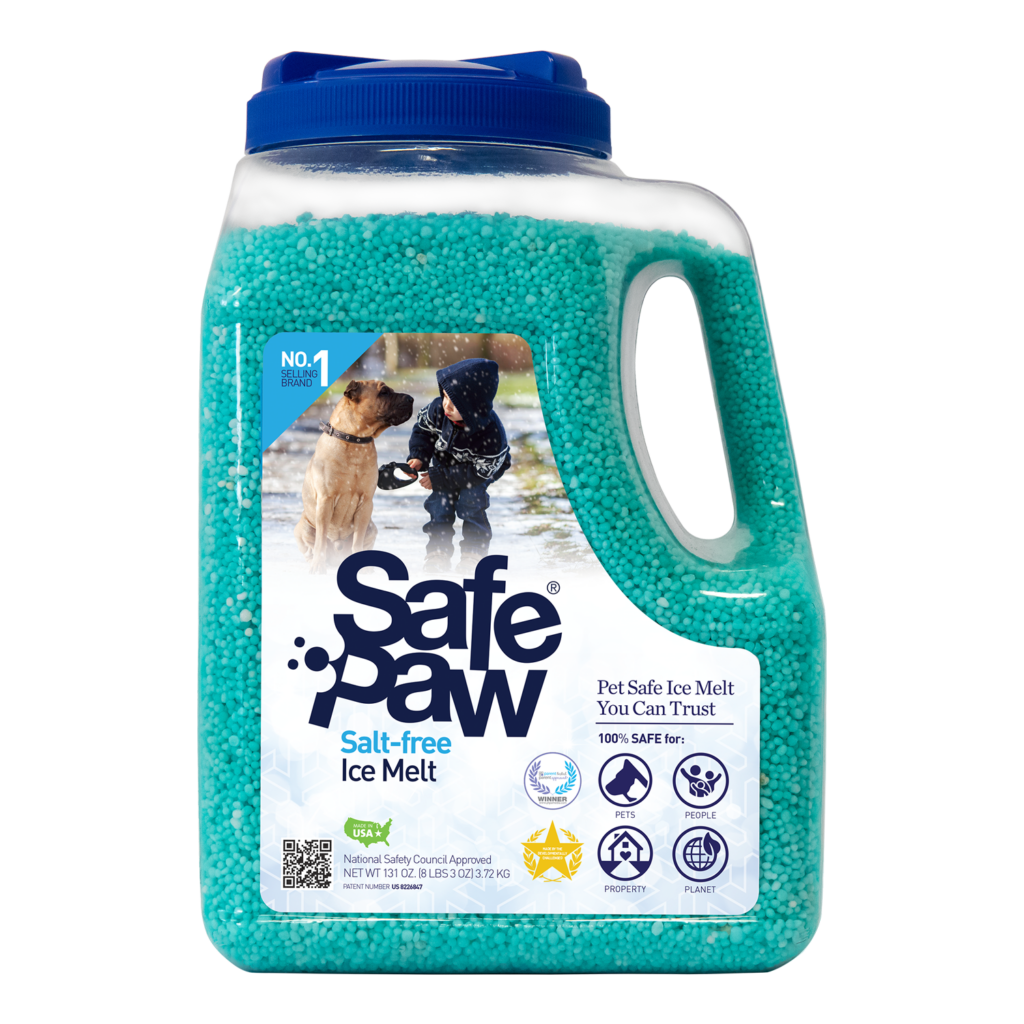
Safe Paw
The Original and the #1 Pet and Child Safe Ice Melt for over 20 years. Guaranteed environmentally safe – will not harm waterways and sensitive wetlands. Safe Paw can change how winter affects our planet.
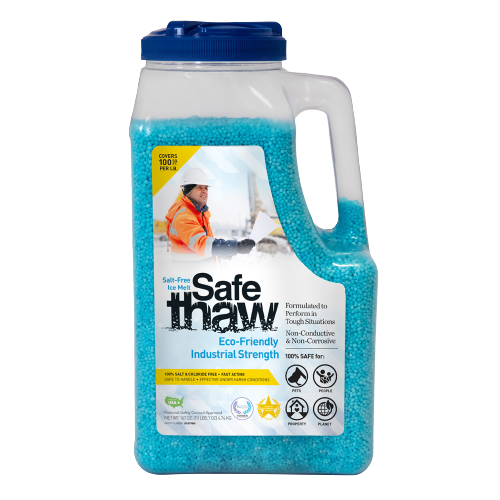
Safe Thaw
Imagine an ice melt you can put down and never worry about. It won’t harm pets, kids and your property. That’s Safe Thaw. Unlike anything else on the market, Ice and Snow Management You Can Trust.