
Black Ice On The Parking Lot- What To Do?
At one point in time, sand and salt were very popular for creating traction. Salt is often considered a natural way to melt ice, which it is not and we will come to it very soon. However, there are some ways with which you can easily protect your pets and kids from the side effects of harmful chemicals and salts.
What Should You Do About Black Ice in a Parking Lot?
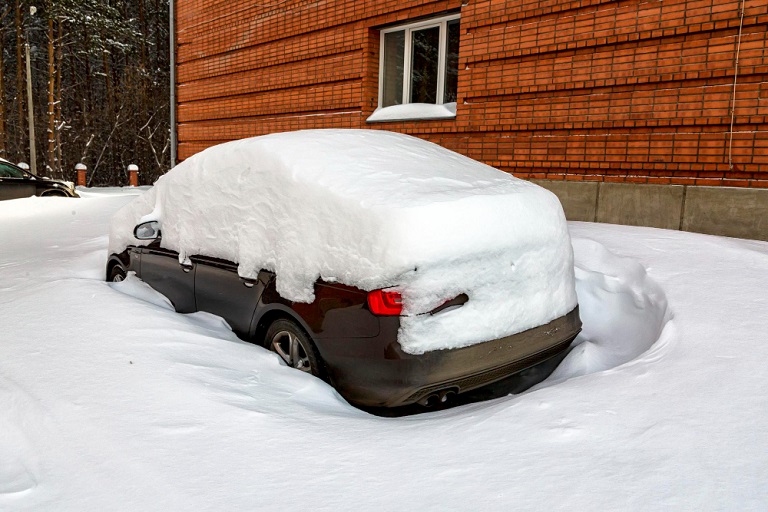
Black ice in a parking lot is a thin, difficult-to-see layer of ice that can reduce traction for both vehicles and pedestrians. When it is present, first identify and mark affected areas, remove loose snow where possible, address standing water or refreezing runoff, and apply an appropriate ice-control or traction material for the conditions. Pay particular attention to pedestrian routes, vehicle entrances, slopes, shaded pavement and areas where meltwater can refreeze. Because black ice can be difficult to see, continue checking the surface as temperatures and weather conditions change.
The National Weather Service describes black ice as patchy ice on transportation surfaces that can be difficult to see and notes that it commonly forms when moisture or snowmelt refreezes. (National Weather Service)
Key Takeaways
- Black ice may look like ordinary wet pavement because the ice layer can be difficult to see.
- Refreezing snowmelt, rain or other moisture can create black ice when pavement temperatures are cold enough.
- Parking-lot management should consider both pedestrian traction and vehicle traction.
- Removing accumulated snow and addressing standing or flowing water can help reduce repeated icing.
- Deicing and traction are different functions: one addresses the ice itself, while the other primarily improves surface grip.
- Conditions can change after treatment, so affected areas should be checked again when temperatures, precipitation or runoff change.
NWS notes that black ice is especially associated with moisture refreezing on cold pavement, while FHWA emphasizes that pavement temperature, rather than air temperature alone, is important when evaluating ice formation and treatment performance. (National Weather Service)
Get ready for winter with Traction Magic instant grip on snow and ice
As a business owner, you might be worried about winter woes. Many business owners even invest in multiple ice melt products to get the desired result. But not all products are the same. Different ice melts have different ingredients and their consequences. If you’re looking for a natural way to melt ice without damaging your home and the environment, stay till the end.
It works at any temperature and is super absorbent and abrasive, helping clean up any mess. It is 100% safe on all surfaces, including decking materials, pavers, and new concrete, creating an instant anti-skid and slip-free surface on ice and snow. It is not affected by the regular freeze/thaw cycles as other ice melts, thus does not cause any damage to the concrete. Since it quickly covers up to 3000 sq. ft. of area, it has proven highly cost-effective.
What Is Black Ice in a Parking Lot?
Black ice is a thin layer of ice that can be difficult to distinguish from the pavement beneath it. A parking lot may therefore appear merely wet even when parts of the surface are frozen and slippery.
How Does Black Ice Form on Parking Lot Pavement?
Black ice can develop when moisture is present on a sufficiently cold pavement surface. Common sources of moisture include rainfall, melting snow, drainage or runoff that later refreezes. Pavement temperature is an important factor because the ground surface and surrounding air do not always have the same temperature.
FHWA specifically identifies pavement temperature as a major factor in frost and black-ice development. (Federal Highway Administration)
What to Do When You Find Black Ice in a Parking Lot
- Identify the affected area. Check how far the icy surface extends.
- Reduce unnecessary traffic through the area where practical.
- Mark difficult-to-see icy sections so pedestrians and drivers can recognize the changing surface condition.
- Remove loose snow and slush that may contribute additional meltwater.
- Address standing water or runoff that may refreeze.
- Apply an appropriate ice-control or traction material according to the surface condition and product instructions.
- Prioritize pedestrian routes, entrances and vehicle access points.
- Recheck the area after additional precipitation, snowmelt or temperature changes.
Where Should You Check for Black Ice in a Parking Lot?
- shaded pavement;
- pedestrian paths and crossings;
- entrances and exits;
- ramps and slopes;
- locations receiving snowmelt or runoff;
- areas near accumulated snow;
- low areas where water remains on pavement.
Phrase these as inspection locations, rather than claiming every location will necessarily develop black ice.
Traction vs. Deicing: What Is the Difference?
A deicing treatment is intended to help melt ice or weaken its bond with a surface. A traction material is intended primarily to increase surface grip. These functions are different, and winter maintenance may require one or both depending on the conditions.
Pros & Cons Table
| Method | Main purpose | Advantages | Limitations |
| Mechanical removal | Remove snow or loose ice | Removes bulk accumulation; useful before further treatment | May leave thin bonded ice or residual moisture |
| Deicing treatment | Melt ice or weaken the ice-surface bond | Helps remove bonded ice | Performance varies with material, pavement temperature, moisture and conditions |
| Traction agent | Increase grip on an icy surface | Can improve surface texture without requiring the ice to disappear first | Does not itself remove the underlying ice |
| Sand or abrasive material | Add surface texture | Can provide temporary additional grip | Requires cleanup and may be displaced by traffic or weather |
| Footwear traction | Improve pedestrian grip | Helps the individual wearer | Does not change the parking-lot surface for other users |
Important Limitations
- A traction material improves grip but does not necessarily remove ice.
- A deicing material may require time and suitable pavement conditions to work.
- Treatment performance can vary with pavement temperature, precipitation, moisture, traffic and application method.
- A surface should not be assumed to be ice-free simply because the ice is difficult to see.
- Snowmelt or runoff may refreeze after an area has already been treated.
- Follow the application instructions for whichever material is being used.
If your parking lot gets full of snow every year, it becomes difficult to melt the ice after clearing the snow. The repercussions of black ice are understandable and how dangerous it can be in parking lots. However, with the help of Traction Magic, many businesses solved this problem by creating ample traction melt to walk and drive safely. The spiky granules look like regular dirt; however, they are a perfect combination of volcanic and rare earth that deliver a superior traction melt solution. Its all-natural crystals first absorb the liquid layer, and then the spiky ends bury themselves in the thin ice sheet creating a sandpaper-like effect.
Get ready for winter with Traction Magic instant grip on snow and ice
What Are You Actually Seeing on the Parking Lot?
| Condition | Typical appearance | Main issue | Appropriate response |
| Black ice | Thin, difficult to see; pavement may appear wet | Low visibility of the hazard and reduced traction | Identify area, improve surface treatment/traction and monitor |
| Compacted snow | Visible packed snow | Tires and footwear may have reduced grip | Mechanical removal where possible plus appropriate treatment |
| Slush | Wet snow/water mixture | Can move, splash or later refreeze | Remove where possible and monitor drainage/refreezing |
| Standing meltwater | Visible water | May freeze if pavement temperature drops | Address drainage/runoff and reinspect |
| Residual bonded ice | Visible or partially transparent ice | Remains attached to pavement | Appropriate deicing/removal method plus traction where required |
Get ready for winter with Traction Magic instant grip on snow and ice
Which Approach Is Best for Different Parking-Lot Ice Conditions?
| Need | Best-fit approach | Important limitation |
| Heavy snow accumulation | Mechanical removal first | Thin residual ice may remain |
| Bonded ice removal | Appropriate deicing treatment | Effectiveness varies by material and pavement conditions |
| Immediate localized surface grip | Traction material | Adds grip but does not remove the ice |
| Pedestrian walking routes | Clearing + appropriate surface treatment + traction footwear | Conditions can change and require rechecking |
| Recurring refreezing | Address snowmelt/runoff source + monitor surface temperature | Weather and drainage conditions can recreate the problem |
| Vehicle tire grip in a localized icy area | Surface traction plus careful vehicle operation | Surface treatment does not replace appropriate tires or driving technique |
FAQs
Conclusion
Traction Magic helps create the correct winter traction and helps avoid any accidents or incidents that may happen in a parking lot. You can easily procure it from your nearest Home Depot or retailer store or order it online. Since it does not form lumps, it is easy to store in a cool and dry place. Even if a child or pet ingests it accidentally, it will not harm their body in any way. You know you’ve put your faith in the right product when it proves to be beneficial every winter.
Related Articles
How to Maximize the Traction of Your Tires
Choosing a Safe Ice Melter for Concrete: What You Need to Know
The Impact of Salting Roads: Pros and Cons
Other Ice Melt Products
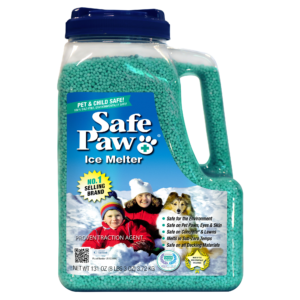
Safe Paw
The Original and the #1 Pet and Child Safe Ice Melt for over 20 years. Guaranteed environmentally safe – will not harm waterways and sensitive wetlands. Safe Paw can change how winter affects our planet.
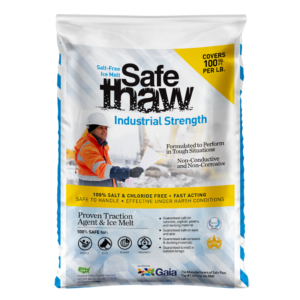
Safe Thaw
Imagine an ice melt you can put down and never worry about. It won’t harm pets, kids and your property. That’s Safe Thaw. Unlike anything else on the market, Safe Thaw can change how winter affects our planet.